03
Ultimaker Factor 4
Client
Client
Ultimaker
Ultimaker
Type
Type
Firmware UX Design
Firmware UX Design
,
,
Year
Year
2023
2023
Subject
Subject
Constructing a Scalable Firmware Foundation for the Ultimaker Factor 4
Constructing a Scalable Firmware Foundation for the Ultimaker Factor 4
the challenge
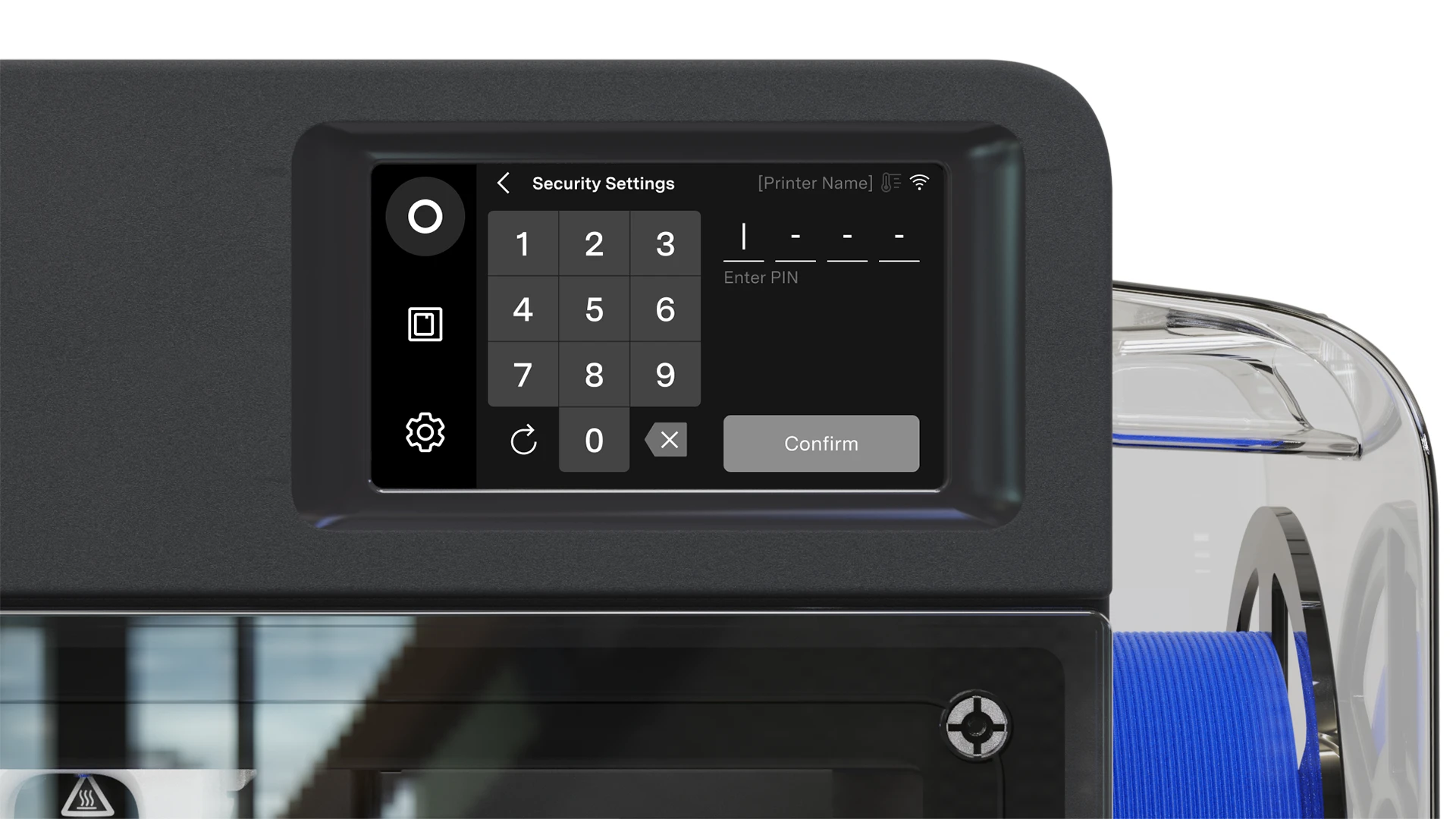
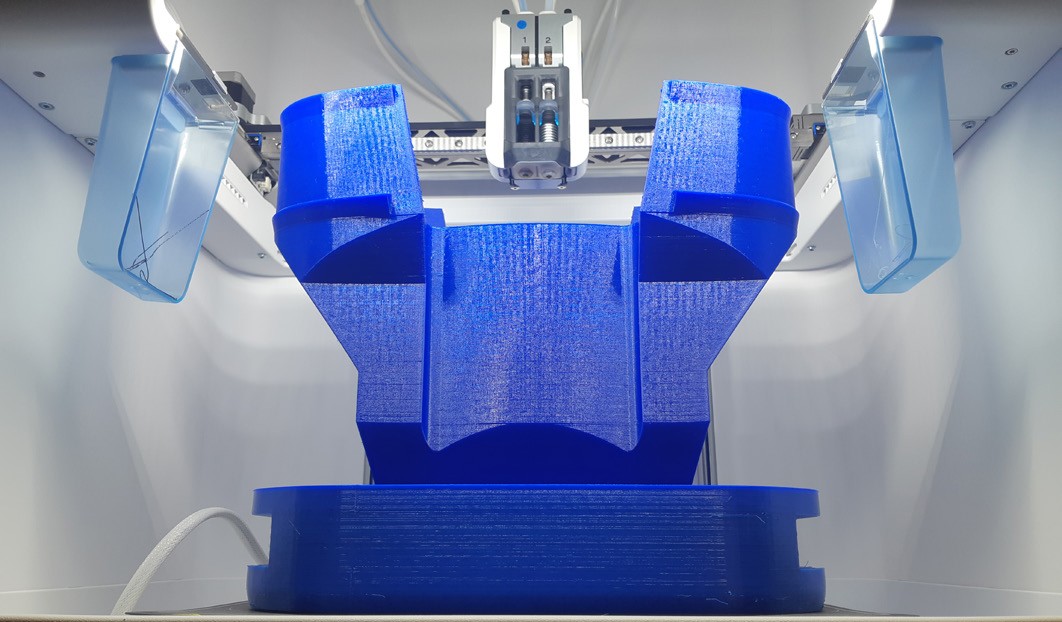
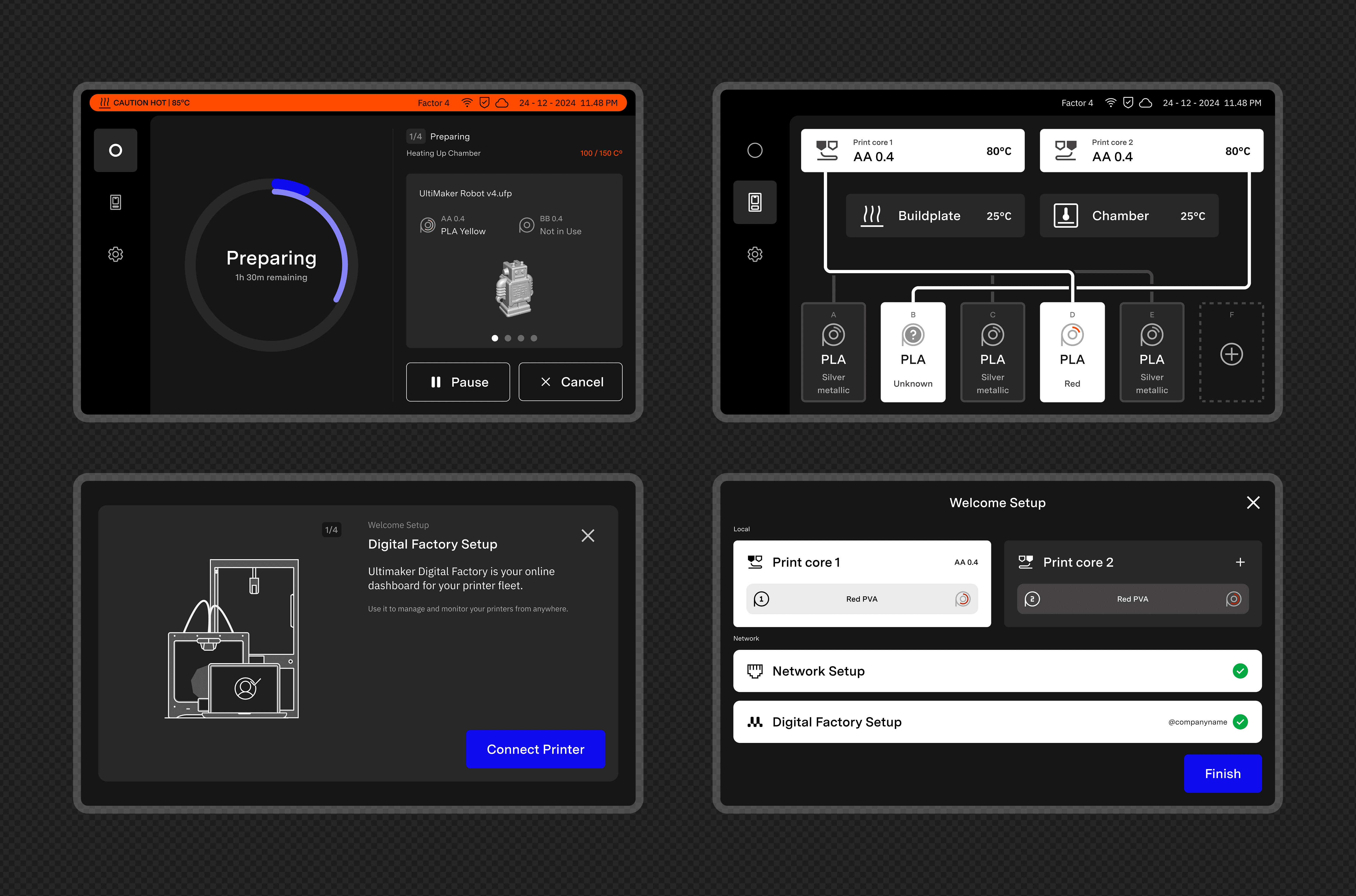
The Ultimaker Factor 4 required more than just a functional interface; it needed a seamless bridge between complex industrial hardware and the human operator. The existing components needed to be translated into a cohesive firmware experience that could not only serve this specific machine but set the precedent for the entire fleet of future printers. The stakes were high: users needed to perform intricate physical maintenance tasks guided solely by a digital screen.
the insight
The platform was becoming "technologically incompatible" with the needs of modern makers. Our research revealed a disconnect: while the content was valuable, the "legacy platform" prevented intuitive interaction on mobile devices and newer screens.
To reach a new target demographic, we couldn't just patch the UI; we had to "reinvent" the visual language and create a responsive experience that felt native to the next generation of creators.
the insight
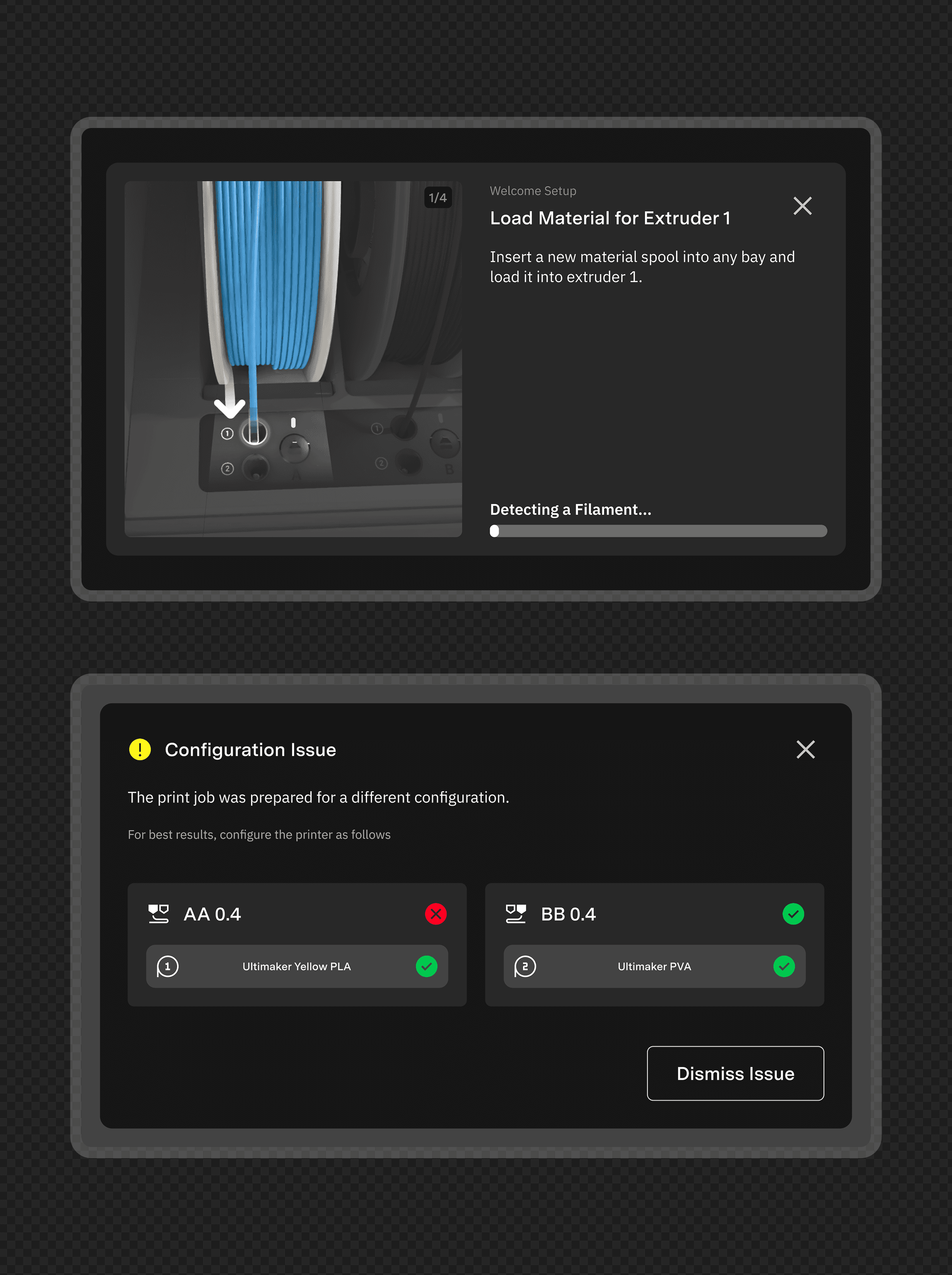
Through both on-site and quantitative remote testing, we discovered that users often feel anxious during physical calibration and maintenance. A "legacy platform" approach to alerts wouldn't work. The insight was that the UI needed to act less like a control panel and more like an intelligent assistant—providing clarity, visual reassurance, and immediate feedback during critical workflows.
the solution
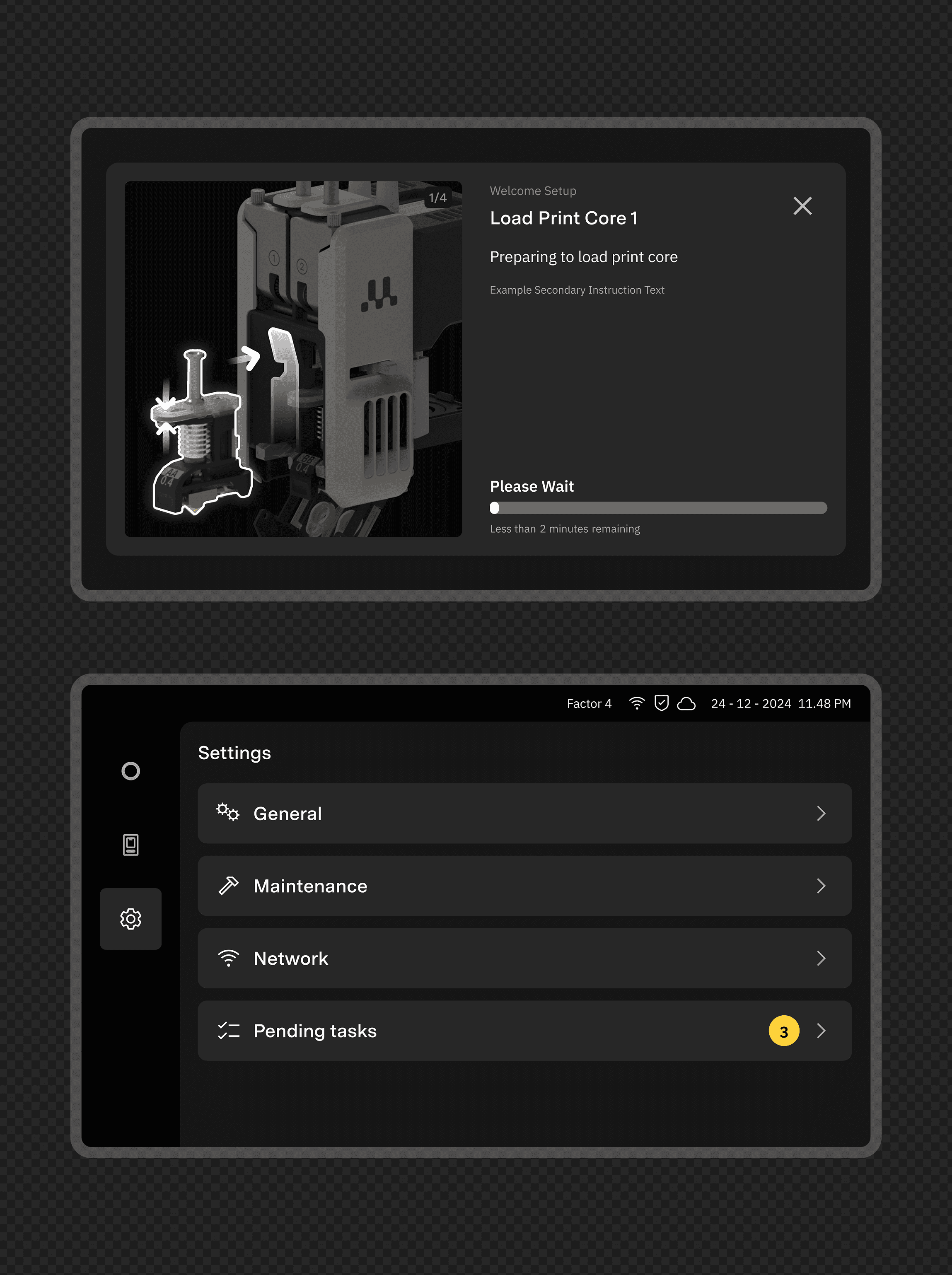
01. Defining a Scalable System: Moving beyond ad-hoc screens, I redefined and grew the firmware UI library to serve as a single source of truth. By treating the UI as a "modular design system", we established a foundation that is now used across different printers, ensuring consistency and drastically reducing development time for future hardware iterations.02. Untangling Complex Flows: I designed the end-to-end user flows for extensive maintenance procedures. This involved breaking down technical friction points into digestible steps. The focus was on "human-centered" logic—ensuring the software held the user's hand through physically demanding tasks like print head calibration and material handling. 03. Visual Language & Support: To bridge the gap between the screen and the physical machine, I created a proprietary set of guide illustrations. These visuals became a core part of the "visual language", simplifying calibration instructions and reducing cognitive load for the operator.
the impact
This project delivered a "paradigm shift" in how Ultimaker approaches firmware design. We didn't just launch a printer; we launched a "scalable brand toolkit" for the firmware. Validated by extensive user testing, the new system ensures that complex industrial maintenance is accessible, reducing downtime and empowering users to manage their hardware with confidence.
the solution
01. Extending the System (The Node): I branched and extended the core Ultimaker software products design system to establish the specific "Thingiverse Node." This wasn't just a visual update; it was a "scalable brand toolkit" that ensured the platform shared DNA with the parent ecosystem while maintaining its own unique identity.
02. Responsive Experience Overhaul: I designed and refined critical "human-centered" flows including Search, Ecommerce, Login, and the complex SCAD customizer. By focusing on a "build-first approach", we transitioned these features to be fully responsive, ensuring a seamless experience across all devices.
03. Visual Rebirth & Community Workbench: To appeal to a new demographic, I completed a total rebranding, defining a fresh "visual language" and asset library.
Crucially, we "partnered with" the community by launching "Thingiverse Workbench." Using tools like Figma Make, we created an "immersive environment" for rapid testing and feedback, allowing users to validate features before full deployment.
the impact
This project delivered a "paradigm shift" in how Ultimaker approaches firmware design. We didn't just launch a printer; we launched a "scalable brand toolkit" for the firmware. Validated by extensive user testing, the new system ensures that complex industrial maintenance is accessible, reducing downtime and empowering users to manage their hardware with confidence.
the challenge
Thingiverse is a pillar of the 3D printing community, but it faced a critical "paradigm shift". The challenge was to integrate this massive platform into the broader Ultimaker ecosystem without alienating its loyal user base.
We needed to evolve it from a standalone repository into a connected "Thingiverse Node," requiring a "digital transformation" that balanced "historic legacy" with modern functionality for a new demographic.