01
Thingiverse
Client
Client
Thingiverse
Thingiverse
Type
Type
Product & Visual Design
Product & Visual Design
,
,
Branding
Branding
Year
Year
2024 - Now
2024 - Now
Subject
Subject
Modernizing the Maker Community: A Scalable Design System, Rebrand for the revival of Thingiverse
Modernizing the Maker Community: A Scalable Design System, Rebrand for the revival of Thingiverse
the challenge
Thingiverse is a pillar of the 3D printing community, but it faced a critical "paradigm shift". The challenge was to integrate this massive platform into the broader Ultimaker ecosystem without alienating its loyal user base. We needed to evolve it from a standalone repository into a connected "Thingiverse Node," requiring a "digital transformation" that balanced "historic legacy" with modern functionality for a new demographic.
the insight
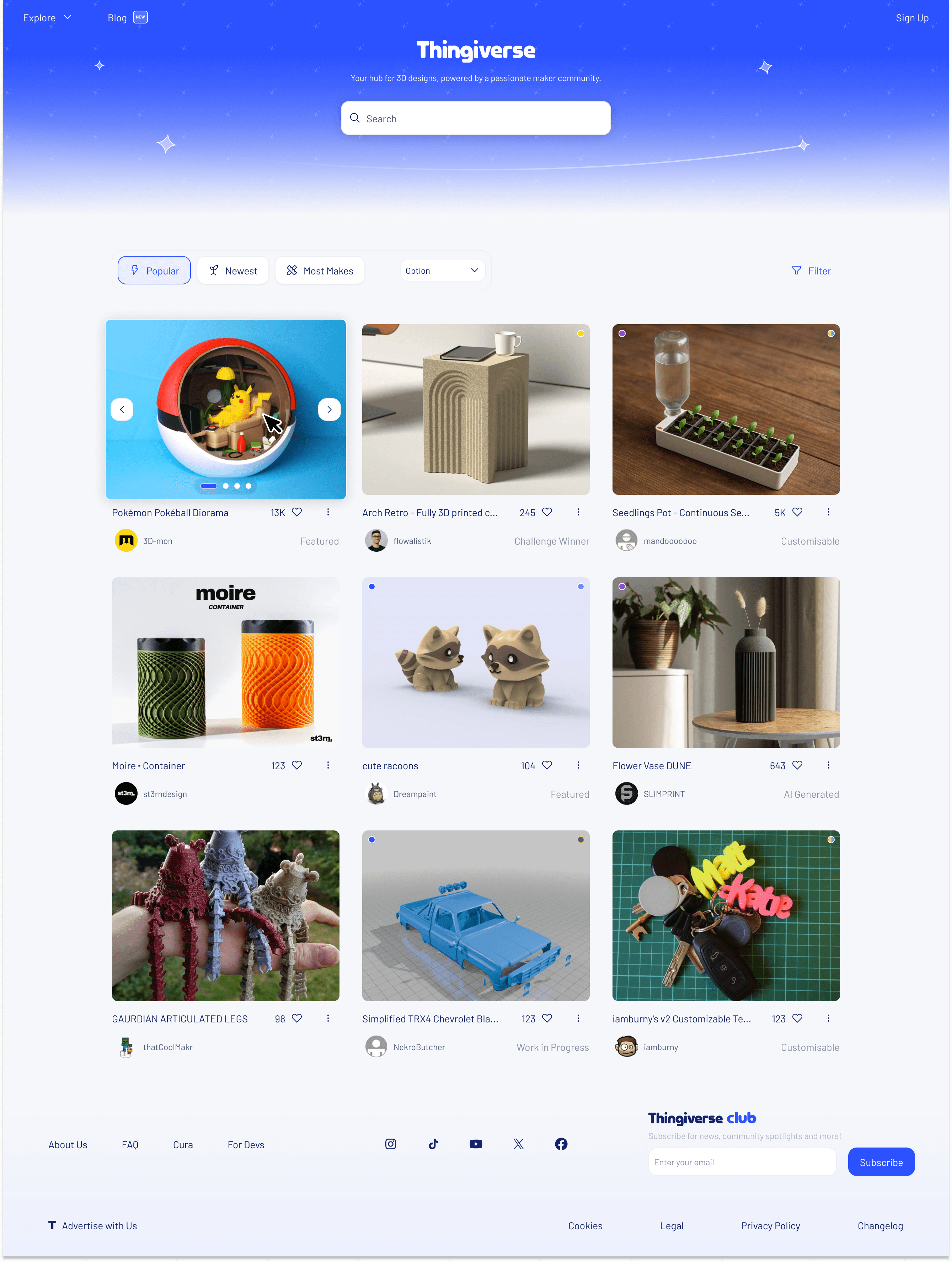
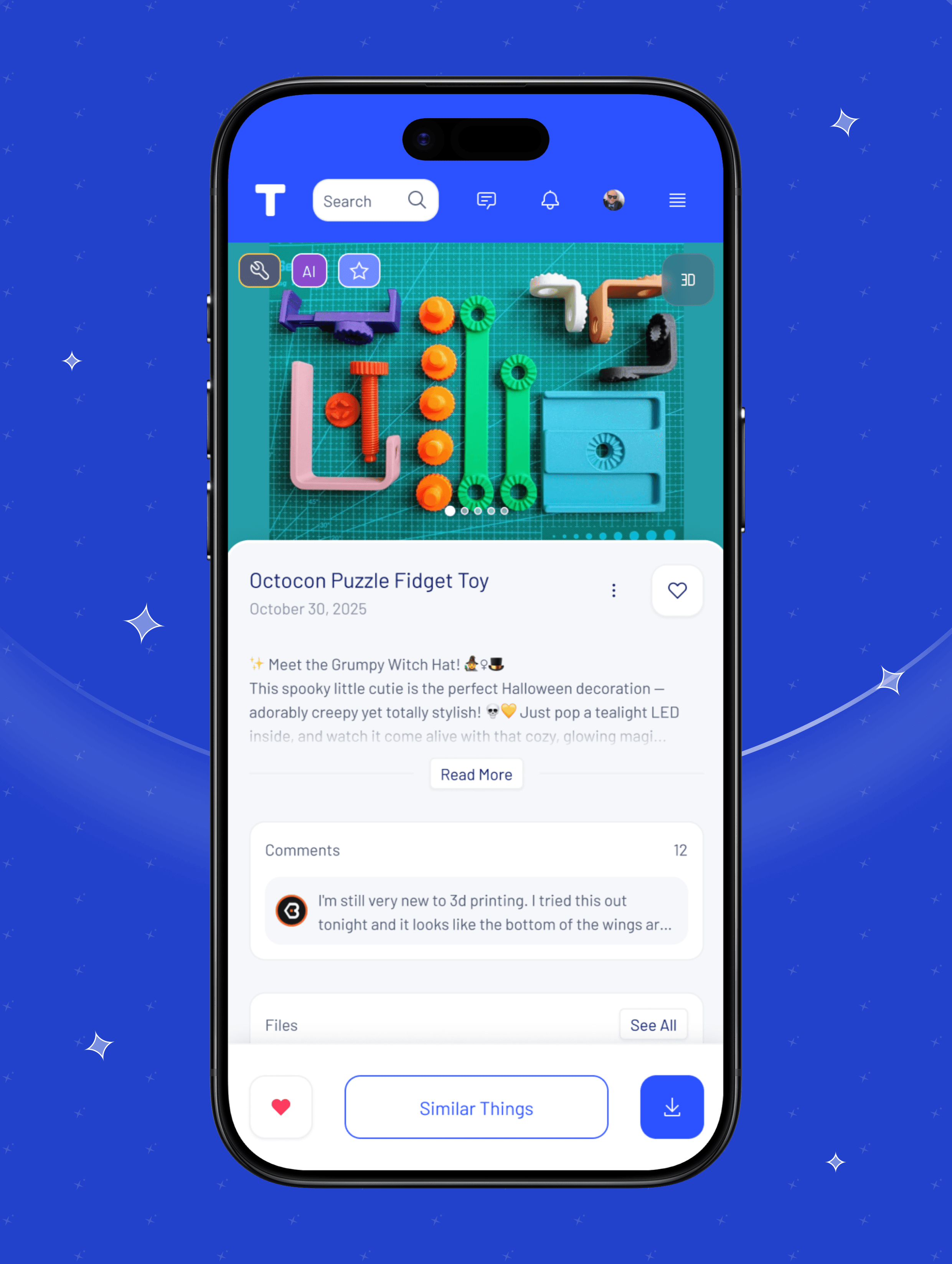
The platform was becoming "technologically incompatible" with the needs of modern makers. Our research revealed a disconnect: while the content was valuable, the "legacy platform" prevented intuitive interaction on mobile devices and newer screens.
To reach a new target demographic, we couldn't just patch the UI; we had to "reinvent" the visual language and create a responsive experience that felt native to the next generation of creators.
the insight
The platform was becoming "technologically incompatible" with the needs of modern makers. Our research revealed a disconnect: while the content was valuable, the "legacy platform" prevented intuitive interaction on mobile devices and newer screens. To reach a new target demographic, we couldn't just patch the UI; we had to "reinvent" the visual language and create a responsive experience that felt native to the next generation of creators.
the solution
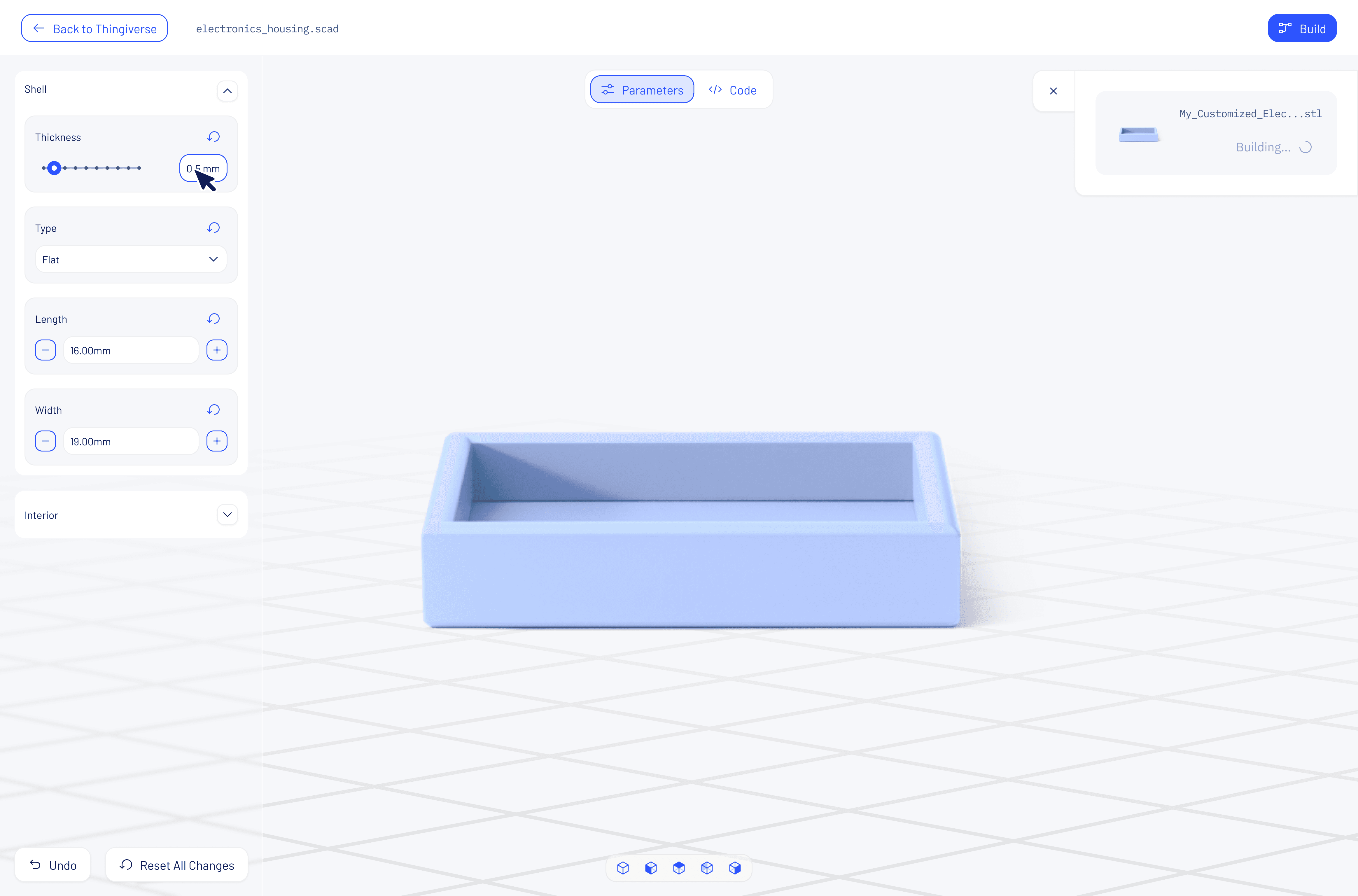
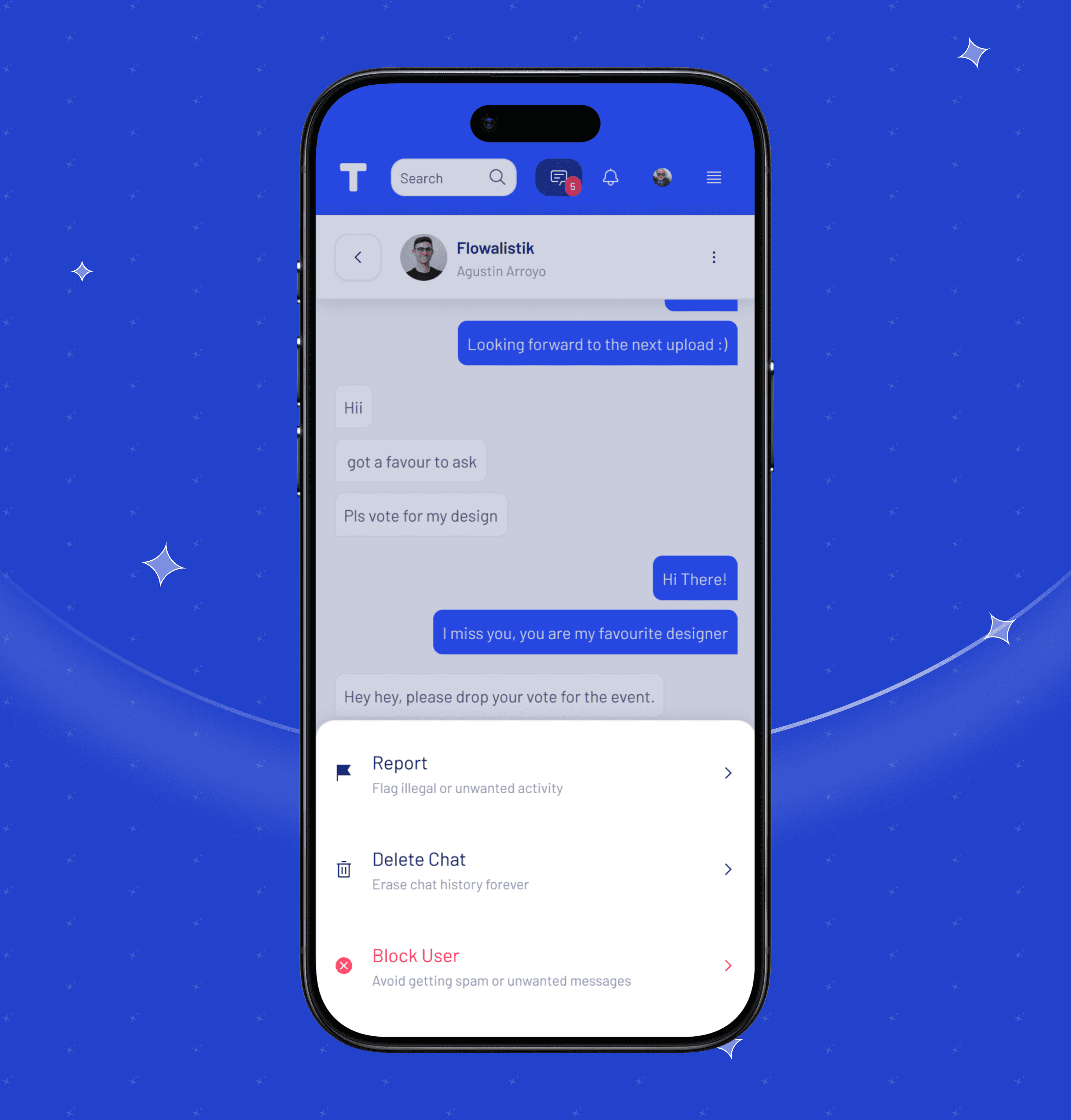
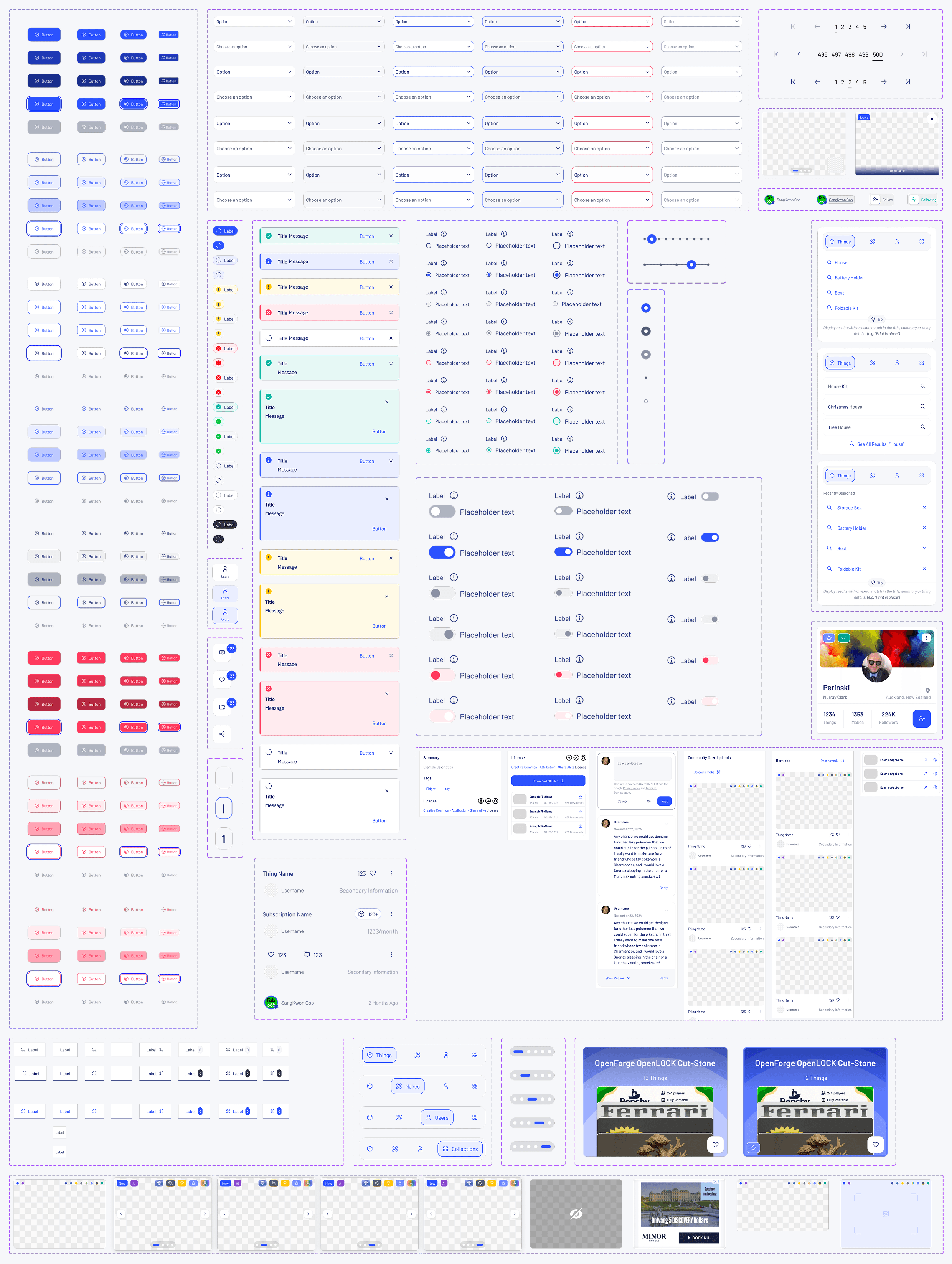
01. Extending the System (The Node): I branched and extended the core Ultimaker software products design system to establish the specific "Thingiverse Node." This wasn't just a visual update; it was a "scalable brand toolkit" that ensured the platform shared DNA with the parent ecosystem while maintaining its own unique identity. 02. Responsive Experience Overhaul: I designed and refined critical "human-centered" flows including Search, Ecommerce, Login, and the complex SCAD customizer. By focusing on a "build-first approach", we transitioned these features to be fully responsive, ensuring a seamless experience across all devices. 03. Visual Rebirth & Community Workbench: To appeal to a new demographic, I completed a total rebranding, defining a fresh "visual language" and asset library. Crucially, we "partnered with" the community by launching "Thingiverse Workbench." Using tools like Figma Make, we created an "immersive environment" for rapid testing and feedback, allowing users to validate features before full deployment.
the impact
The re-platforming delivered a "future impact" that revitalized the community. By establishing a robust design system and a refreshed brand identity, we successfully bridged the gap between legacy users and new makers. The result is a "modular design system" that supports continuous growth and community-led innovation.
the solution
01. Extending the System (The Node): I branched and extended the core Ultimaker software products design system to establish the specific "Thingiverse Node." This wasn't just a visual update; it was a "scalable brand toolkit" that ensured the platform shared DNA with the parent ecosystem while maintaining its own unique identity.
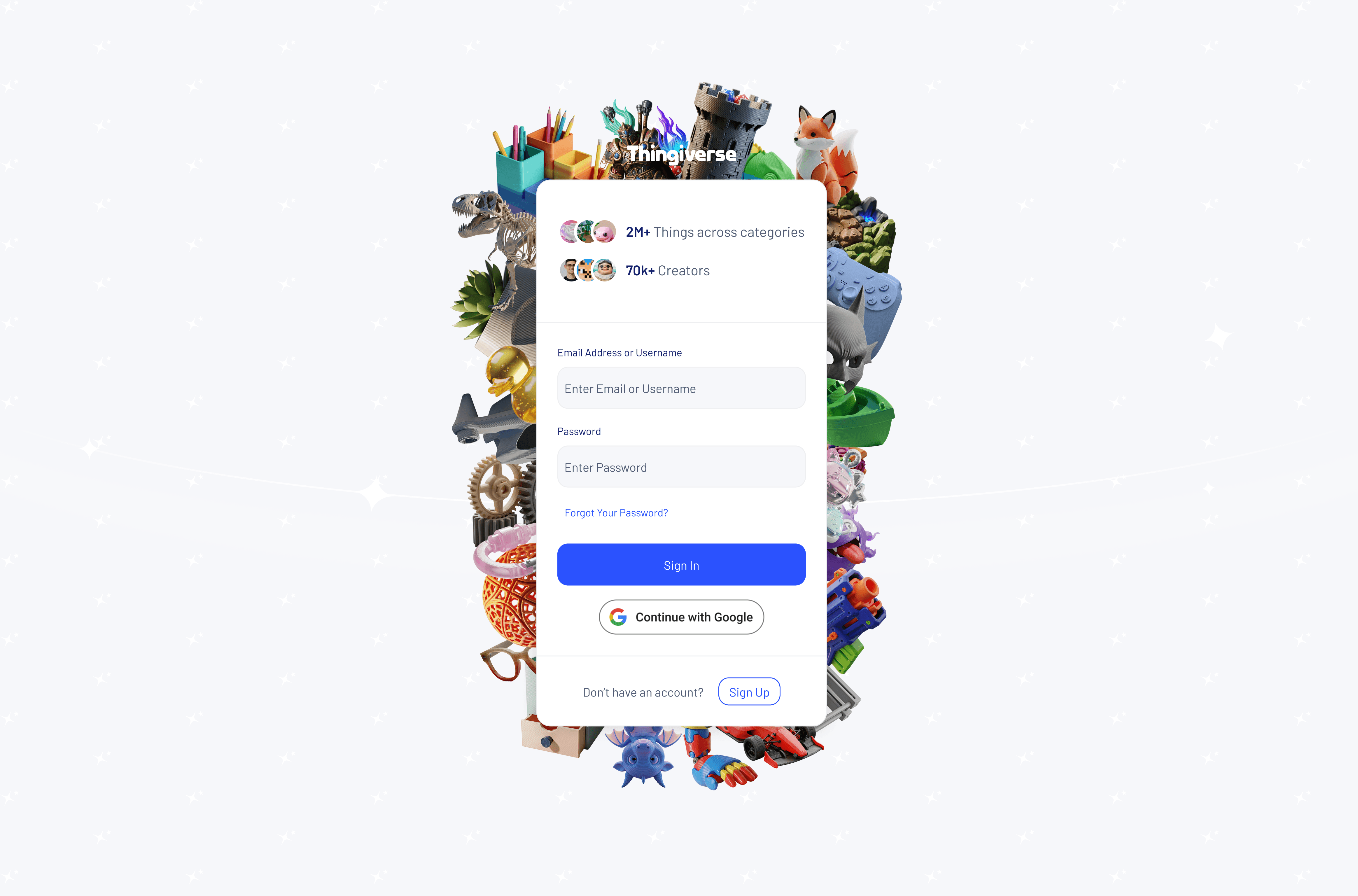
02. Responsive Experience Overhaul: I designed and refined critical "human-centered" flows including Search, Ecommerce, Login, and the complex SCAD customizer. By focusing on a "build-first approach", we transitioned these features to be fully responsive, ensuring a seamless experience across all devices.
03. Visual Rebirth & Community Workbench: To appeal to a new demographic, I completed a total rebranding, defining a fresh "visual language" and asset library.
Crucially, we "partnered with" the community by launching "Thingiverse Workbench." Using tools like Figma Make, we created an "immersive environment" for rapid testing and feedback, allowing users to validate features before full deployment.
the impact
The re-platforming delivered a "future impact" that revitalized the community. By establishing a robust design system and a refreshed brand identity, we successfully bridged the gap between legacy users and new makers. The result is a "modular design system" that supports continuous growth and community-led innovation.
the challenge
Thingiverse is a pillar of the 3D printing community, but it faced a critical "paradigm shift". The challenge was to integrate this massive platform into the broader Ultimaker ecosystem without alienating its loyal user base.
We needed to evolve it from a standalone repository into a connected "Thingiverse Node," requiring a "digital transformation" that balanced "historic legacy" with modern functionality for a new demographic.